
When the temperature drops across the UK and the first signs of frost appear on your windscreen, the conversation in every garage and household inevitably turns to grip. Winter driving in Great Britain is less about deep snow and more about the treacherous “slush and soak” period where the rain is constant and the roads are slick. Choosing the right rubber for your vehicle isn’t just a maintenance task; it’s a critical safety decision that affects how you and your family navigate the motorways this season. While many are tempted by the low price of unbranded new tyres, a growing number of savvy drivers are looking toward high-quality wholesale part worn tyres as a superior alternative.
At G Tyres Ltd, we see thousands of tyres pass through our warehouse, and we always focus on one specific standard that changes the game: the 4mm tread depth. Most safety debates surrounding used tyres assume you are buying something near the legal limit of 1.6mm, but when you step up to a 4mm premium brand, the safety profile shifts entirely. This blog will explore why that extra tread matters and how you can stay safe without overspending this winter.
The 7°C Rule: Why Your Tyres Might Fail This Winter
Most UK motorists wait for snow to fall before worrying about their tyres, but the real danger starts much earlier. There is a scientific “sweet spot” in tyre performance known as the 7°C threshold. Once the ambient temperature drops below seven degrees Celsius, the rubber compound in standard summer tyres begins to harden, losing its ability to “key” into the road surface. This creates a sensation of sliding, even on bone-dry tarmac. Winter-optimised tyres, including many of the premium part worn tyres we stock from German imports, are engineered with a higher silica content. This allows the rubber to remain supple and “sticky” even when the air is freezing, ensuring your braking distances don’t double just because the sun went down.
When the rain starts, as it always does in a British winter that rubber flexibility becomes your primary defense against aquaplaning. Imagine driving a 1.5-tonne vehicle at 60mph on a thin film of water; if your tyres are too hard or too worn, you aren’t driving, you’re water-skiing. One Reddit user in the r/CarTalkUK community recently noted, “I swapped my new budget tyres for a set of part-worn Continentals with 4mm tread, and the difference in wet-weather cornering was like night and day.” This sentiment highlights a crucial truth: the quality of the rubber often matters more than whether the tyre is “brand new.” By choosing a premium brand that was designed for these exact conditions, you are investing in engineering that a budget factory simply cannot replicate.
Why the 1.6mm Legal Limit is Dangerous in the Rain
In the UK, the law says you are legal as long as you have 1.6mm of tread across the central three-quarters of the tyre. However, “legal” does not always mean “safe.” According to data from TyreSafe, a car braking at 50mph in the wet will take an extra 11.9 metres to stop if the tread is at 1.6mm compared to 3mm. That is nearly three car lengths, the difference between a close call and a serious collision. This is why we are so vocal about our 4mm tread depth standard. We believe that 1.6mm is an absolute minimum for a dry summer day, but for a wet winter motorway, it leaves no margin for error.
The grooves in your tyres act like water pumps. At 60mph, a high-quality tyre can disperse upwards of 30 litres of water every second. As the tread wears down, the “pipes” in that pump get smaller, and the water has nowhere to go but under the tyre, lifting it off the road. When you source wholesale part worn tyres that always meet the 4mm mark, you are providing a safety buffer that handles the heavy UK rainfall with ease. It’s about more than just passing an MOT; it’s about ensuring that when you hit the brakes in an emergency, the car actually stops where you intend it to.
The Myth of "New" vs. The Reality of Premium
There is a common misconception that a new tyre is inherently safer because it hasn’t been used. However, the “new” market is flooded with low-cost, unbranded tyres that often skip the rigorous R&D processes of the big players. A new budget tyre might have 8mm of tread, but if that rubber is a cheap synthetic blend, it will struggle to grip in the cold. Contrast this with a part worn Michelin or Bridgestone tyre. Even with 4mm of tread, that tyre was built with multi-layered compounds and advanced siping technology specifically designed to bite into ice and slush.
As a wholesale supplier, we see this reality every day. Our clients mostly garage owners and tyre retailers, prefer the “raw” premium stock we provide because they know the structural integrity of a premium brand is far superior. As one veteran mechanic from a Birmingham forum put it, “I’d rather have half-worn premium rubber under me than a full-tread budget tyre that feels like plastic in the rain.” By focusing on part worn tyres with 4mm of life left, you are effectively buying a high-performance tool at a second-hand price. It is the smartest way to manage a fleet or a family car during the expensive winter months.
Sourcing Quality: The German Import Factor
You might wonder where these high-quality tyres come from. A large portion of the UK’s best wholesale part worn tyres are actually imports from Germany and other EU countries. In Germany, the regulations are much stricter; many drivers are legally required to switch to winter part worn tyres, and safety recommendations often push for replacement at 3mm or 4mm. This creates a massive supply of premium tyres that are deemed “finished” by German standards but are actually in their prime for UK road conditions.
At G Tyres Ltd, we tap into this supply chain to bring that quality to the UK market. We maintain a massive inventory of over 30,000 tyres, ensuring that we can meet the bulk demands of traders across London, Manchester, and beyond. We don’t spend time on individual pre-sale inspections for every single unit to keep our trade prices as low as possible, but our strict sourcing of 4mm stock ensures the value is always there. Whether you are a business looking to stock up for the seasonal rush or an individual researching the best options, understanding the origin of your tyres helps build that essential layer of trust.
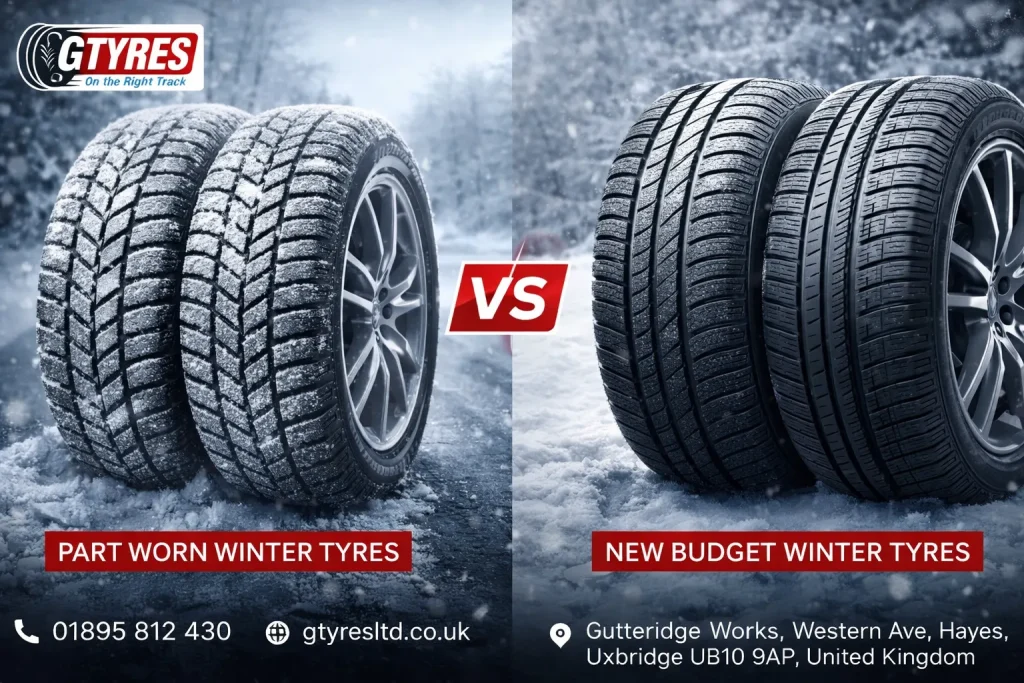
Part Worn Tyres vs. New Budget Tyres for Winter: The Ultimate Comparison
When you are standing in a tyre shop or browsing online, the choice usually boils down to two options: a brand-new “budget” tyre from a brand you’ve never heard of, or a part worn tyre from a world-class manufacturer like Continental or Pirelli tyres. To the untrained eye, the new tyre looks better because it’s shiny and has 8mm of tread. However, the rubber industry has a saying: “Tread is for water, but the compound is for grip.” A new budget tyre is often made from a harder, cheaper synthetic rubber that turns into a hockey puck when the temperature hits zero. In contrast, wholesale part worn tyres from premium brands are engineered with high-silica compounds that stay soft, allowing the tyre to “hug” the road even in a frost.
A real-world analogy helps clarify this. Think of a high-end winter coat versus a cheap plastic raincoat. The raincoat might be “new,” but it won’t keep you warm when the blizzard hits. The premium coat, even if worn for one season, still has the insulation and technology to protect you. Similarly, a part worn tyre with 4mm tread depth from a premium brand still possesses the advanced “siping” (the tiny slits in the tread blocks) that bites into ice. This is why many UK garage owners tell us they prefer stocking our “raw” premium stock; they know that a used Michelin will always outperform a new “no-name” tyre in a recursive braking test on a wet A-road.
The Performance Gap: Braking Distances in the Wet
The most critical metric for any winter tyre is how fast it can bring a vehicle to a complete stop. Data from automotive testing facilities shows a startling trend: premium tyres, even when partially worn, maintain a more consistent braking curve than budget tyres. This is because premium brands invest millions into “tread stiffness” and “hydrodynamic flow.” Even at a 4mm tread depth, the grooves in a premium tyre are designed to maintain their shape under the pressure of a heavy brake, whereas a cheap tyre’s tread blocks might “fold,” reducing the contact patch exactly when you need it most.
One user on a popular UK automotive forum shared their experience: “I bought a set of new budget tyres for my van last winter. The first time it rained, I felt the ABS kicking in constantly. I swapped them for some Bridgestones part worn with 5mm left, and the van felt planted again.” This isn’t just an anecdote; it’s physics. For wholesale buyers, providing this level of safety to your customers is a massive selling point. By offering wholesale part worn tyres that always meet the 4mm standard, you are giving drivers a premium safety product that fits a budget-conscious world.
The Environmental Impact of Choosing Part Worn
Beyond safety and cost, there is a significant environmental “win” when choosing used tyres. Producing a single new car tyre requires approximately 7 gallons of oil and releases a substantial amount of CO2 into the atmosphere. By extending the life of a tyre that still has 4mm tread depth, we are practicing a form of automotive recycling that reduces the demand for new raw materials. In the UK, we dispose of millions of tyres every year, many of which still have thousands of miles of safe life left in them.
When a business buys wholesale part worn tyres in bulk, they are contributing to a “circular economy.” At G Tyres Ltd, our inventory of 30,000+ tyres represents a massive saving in industrial waste. We bring these tyres mostly high-quality German imports, back into the market where they can serve another two or three winters safely. It is a rare situation where the most economical choice for the wallet is also the most responsible choice for the planet. For the modern driver who is conscious of their carbon footprint, a high-quality part-worn tyre is the only logical choice.
Understanding the "German Standard" of 4mm
A frequent question we get at our warehouse is: “If these tyres are so good, why did the previous owner let them go?” The answer usually lies in the “German Standard.” In Germany, driving laws are much more stringent regarding seasonal changes. Many fleet vehicles and safety-conscious drivers replace their tyres as soon as they reach 4mm to ensure maximum performance on the Autobahn. Because of this, the UK market benefits from a steady stream of “high-tread” premium rubber.
This is exactly the stock we specialize in. While the UK legal limit is a lowly 1.6mm, we refuse to settle for that. Our wholesale part worn tyres focus on that 4mm sweet spot. This means that when you buy from G Tyres Ltd, you aren’t getting a tyre that is “nearly finished.” You are getting a tyre that has been maintained to a high continental standard and is ready to handle the unpredictable British winter. Whether you are in London, Birmingham, or a snowy corner of Scotland, having that extra 2.4mm of tread above the legal limit provides the peace of mind every driver deserves.
Sourcing Wholesale Part Worn Tyres: The Business Logic for UK Garages
For garage owners and tyre retailers across the UK, the transition from autumn to winter is the busiest time of the financial year. As the first frost hits, the “emergency” phone calls start, customers who have failed an MOT on tread depth or those who suddenly feel their car sliding on the morning commute. To meet this demand profitably, businesses need a supply chain that is both reliable and high-volume. This is where the strategy of stocking wholesale part worn tyres becomes a massive competitive advantage. At G Tyres Ltd, we manage an inventory of over 30,000 tyres, allowing our trade partners to access premium brands at a fraction of the cost of new units.
The business logic is simple: trade arbitrage. By purchasing “raw” stock in bulk, garages can offer their customers a 4mm tread depth premium tyre for a price that undercuts the big-box retailers selling budget new tyres. We do not perform individual pre-sale inspections on every unit in our warehouse to ensure we can maintain the lowest possible trade prices for you. This allows you, the expert on the ground, to inspect, fit, and provide value to your local community. As one long-term client from a Manchester-based service centre told us, “Stocking 4mm part-worns from G Tyres allowed us to double our turnover during the winter rush because we had the premium brands people trust at prices they could actually afford.
Why a 30,000+ Tyre Inventory Matters for Your Shop
Finding reliable part worn tyres near you can feel overwhelming, but choosing a trusted supplier makes all the difference. At G Tyres, we provide carefully selected tyres with a minimum tread depth of 4mm, ensuring both safety and performance. Many drivers search locally for “part worn tyres near me,” but not all options guarantee quality. Real users often share that buying from a reputable supplier saved them from hidden damage or uneven wear they might have missed elsewhere.
When looking for tyres locally, prioritize suppliers with transparent sourcing, consistent stock, and positive customer reviews. A trusted supplier will also guide you through checks for tread, sidewalls, age, and wear patterns. Think of it like shopping for fresh produce, reliable stores ensure quality, while others may sell items that look fine but have hidden problems. For easy access to trusted options, G Tyres also offers nationwide delivery and a wide range of tyres, which you can explore in our product catalogue. This way, you get safe, high-quality part worn tyres without compromising convenience or cost.
Managing Logistics: Delivery Across London, Birmingham, and Manchester
One of the biggest headaches for any trade business is logistics. You need your stock to arrive before the snow does. We have streamlined our distribution network to ensure that we can provide rapid delivery to the UK’s major automotive hubs. Whether your shop is located in the heart of London, the industrial estates of Birmingham, or the outskirts of Manchester, we understand that “time is money.” Our wholesale part worn tyres are moved efficiently to ensure your racks are always full when the seasonal demand peaks.
We always encourage our trade partners to “stock up early.” Waiting until the first major snowfall to order your winter stock is a recipe for missed opportunities. By securing your bulk 4mm stock in October or November, you are prepared for the “MOT panic” that always happens at the end of the year. Our bulk pricing models are designed to reward garages that think ahead, giving you the best possible margins so you can grow your business while keeping your local drivers safe on the road.
The Ethics of Transparency in the Wholesale Trade
In the part-worn industry, transparency is the foundation of a long-term partnership. We are very clear about our business model: we provide high-quality, high-tread “raw” stock directly from European imports. We do not hide the fact that we don’t inspect every tyre individually before sale; instead, we pass that time-saving directly to you in the form of lower prices. This “as-is” wholesale model is what allows savvy garage owners to capture the highest profit margins in the industry.
When you sell a tyre with 4mm tread depth, you are selling peace of mind. Your customers trust you as the mechanic to verify the safety of what goes on their car. By sourcing from a supplier that always hits that 4mm standard, you are starting with a much better product than the 2mm “junk” often found at smaller, less reputable auctions. It’s about building a reputation for quality in your town. When a customer sees that the “used” tyre you fitted actually has more than double the legal limit of tread, they become a customer for life.
Winter Safety & MOT Compliance: Navigating the Legal Landscape
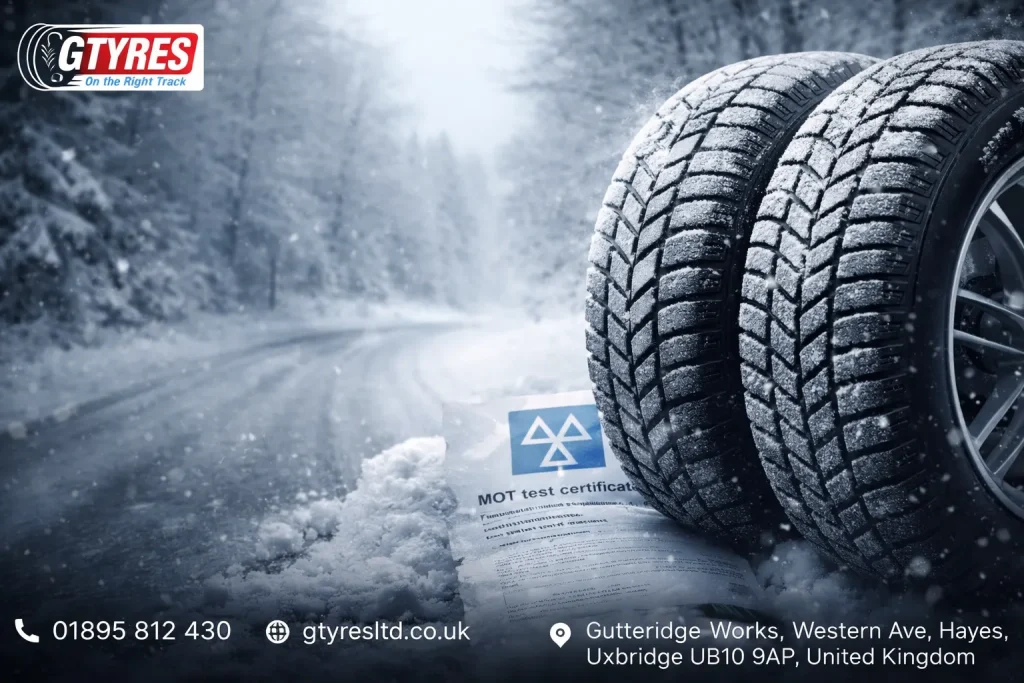
As the winter months roll in, many UK drivers begin to worry about their upcoming MOT test. It is a common myth that fitting part worn tyres will lead to an automatic failure. In reality, the DVSA (Driver and Vehicle Standards Agency) guidelines are very clear: as long as a tyre is structurally sound, has the “PART WORN” mark, and meets the minimum tread depth, it is perfectly legal. However, at G Tyres Ltd, we believe in going beyond the bare minimum. While the legal limit to pass an MOT is 1.6mm, we always supply our wholesale part worn tyres with a 4mm tread depth. This ensures that not only will the vehicle pass the test, but the driver will have a significant safety buffer for the remainder of the winter season.
Safety on the road is a shared responsibility, and it starts with the integrity of the rubber. When a tyre is fitted, it must be free from large cuts, bulges, or exposed cords. By sourcing premium brands, we ensure that the internal structure of the tyre, the “carcass” is built to a much higher standard than a budget alternative. As one user on a popular automotive DIY YouTube channel commented, “I was nervous about buying used, but when I saw the 4mm depth and the Michelin sidewall, I realized I was getting a better product than the cheap new tyres at the same price.” This is the core of our philosophy: providing high-performance safety that is accessible to everyone.
The 4mm "Safety Buffer" vs. The 1.6mm Legal Limit
To truly understand the value of our stock, you have to look at the “usable life” of the tyre. If you buy a tyre with 2mm of tread, you only have 0.4mm of usable rubber before you hit the legal limit. That tyre might last you a month of heavy driving. However, with our 4mm tread depth standard, you have 2.4mm of “safety buffer.” This represents thousands of miles of road time. In the wholesale market, this is what we call “value-per-millimetre.”
Garages that stock our 4mm premium tyres are able to offer their customers a product that lasts significantly longer than the “cheap” part-worns found elsewhere. It reduces the frequency of replacements and builds trust between the mechanic and the driver. When the rain is lashing down on a dark January evening, that extra tread is the difference between a controlled stop and a dangerous slide. We always prioritize this buffer because we know that in the UK, weather conditions can change in an instant.
Final Words: Why G Tyres Ltd is Your Winter Partner
As we conclude this deep dive into winter tyre safety, the message is clear: you don’t have to choose between your budget and your safety. By opting for wholesale part worn tyres from premium manufacturers, you are accessing world-class engineering that handles the cold, the wet, and the slush of a UK winter with ease. Our commitment to a 4mm standard and our massive inventory of 30,000+ tyres makes us the go-to partner for trade businesses and informed drivers alike.
We invite you to explore our latest stock at GTyres LTD. Whether you are a garage owner in London looking to stock up for the seasonal rush or a driver in Birmingham seeking a reliable set of premium wheels, we are here to provide the “raw” quality stock you need. Don’t wait for the first frost to compromise your safety. Invest in high-tread, premium rubber today and drive with confidence all winter long.
Frequently Asked Questions
Yes, provided they are high-quality premium brands and meet legal standards. While many part-worns are sold near the legal limit, our wholesale part worn tyres maintain a 4mm tread depth. This extra tread is vital for clearing slush and water, making them significantly safer for UK winter conditions than lower-tread alternatives.
While the UK legal minimum is 1.6mm, 4mm is the recommended safety "sweet spot" for winter. This depth provides enough groove volume to compress snow and displace deep water, which helps prevent aquaplaning. A premium 4mm tyre often handles icy roads better than a brand-new budget tyre due to superior rubber engineering.
Absolutely. To pass an MOT, a tyre must be free of structural damage and have at least 1.6mm of tread. Because we hamesha supply tyres with 4mm of tread, they will comfortably pass the MOT inspection and provide you with thousands of miles of legal driving throughout the year.
Premium brands (like Michelin or Continental) use advanced silica compounds that remain flexible in temperatures below 7°C. Budget tyres often use harder rubber that loses grip in the cold. A 4mm premium part-worn offers better winter braking and cornering than a new "no-name" tyre with 8mm of tread.
You should look for the "PART WORN" stamp, check the DOT code for the age of the rubber, and verify the tread depth. At G Tyres Ltd, we specialize in high-tread German imports, ensuring the internal structure and external grip are ready for heavy UK road use.
Yes, it is legal under the Motor Vehicle Tyres (Safety) Regulations 1994. These laws require tyres to be marked correctly and be free of large cuts or bulges. We ensure our wholesale stock meets these high standards so that garages can sell to their customers with total confidence.
Most of our high-quality stock is imported from Germany. Because German laws require higher tread depths for winter driving (often 3mm or 4mm), many premium tyres are replaced early. This allows us to bring high-tread, top-tier brands into the UK market at unbeatable wholesale prices.