
Yes, part worn tyres can be MOT legal in the UK, but only when they meet the same MOT tyre standards as any other tyre fitted to a vehicle. The tyre does not fail an MOT simply because it has been used before. It fails when it has a serious defect, unsafe structure, incorrect fitment, or tread depth below the legal requirement. Think of it like buying a used phone. The word “used” does not automatically mean broken, but you still need to check the battery, screen, charging port, and overall condition before trusting it. Tyres work the same way, except the stakes are higher because they are the only part of the vehicle touching the road. A good part worn tyre should feel like a sensible purchase, not a gamble. That is why this guide looks at the MOT rules, the safety checks, and the buying decisions behind part worn tyres.
For drivers, garages, tyre shops, and mobile fitters, the real question is not just “Are part worn tyres MOT legal?” The better question is, “Does this tyre have enough safe condition, useful tread, and correct fitment to be worth fitting?” MOT rules focus on roadworthiness. That means tread depth, sidewall condition, tyre structure, size, rating, visible damage, and how the tyre sits on the wheel all matter. At G Tyres LTD, the focus is on supplying wholesale part worn tyres for buyers who need practical remaining value, not tyres sitting right on the edge of replacement. Still, no honest tyre supplier should tell you that tread depth alone guarantees an MOT pass. A tyre with decent tread can still fail if it has a bulge, exposed cord, poor repair, or serious cut. That is the difference many buyers miss, and it is exactly where this blog starts.
Quick Answer: Can Part Worn Tyres Pass An MOT?
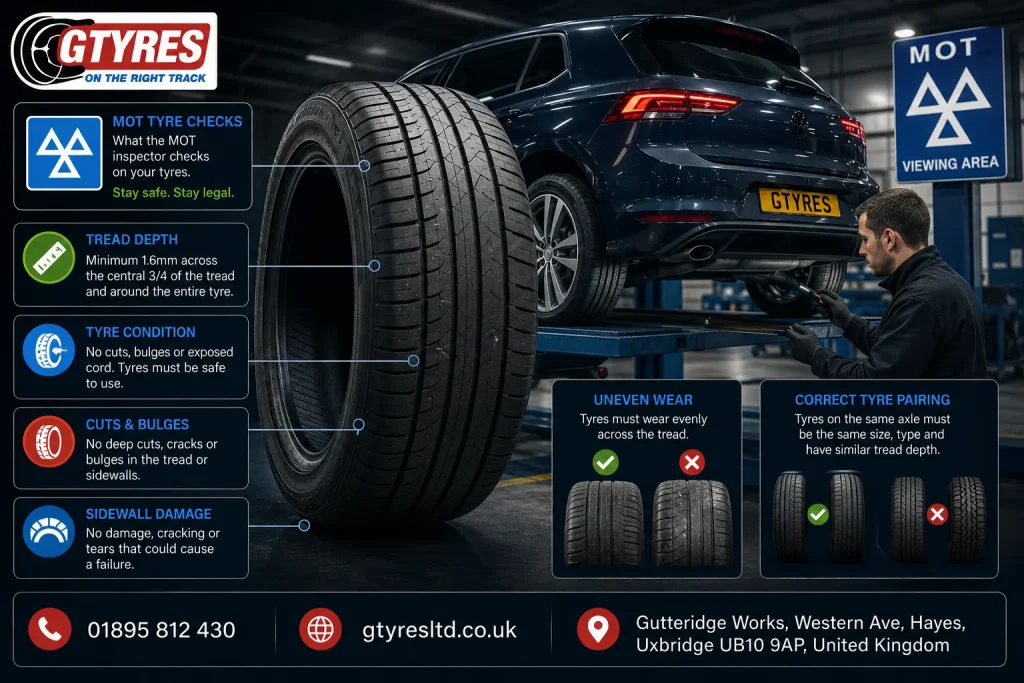
Part worn tyres can pass an MOT if they meet the required tyre standards at the time of the test. The MOT tester is not looking at the tyre and failing it just because it is part worn. They are checking whether the tyre is safe, legal, suitable for the vehicle, and free from serious defects. According to the official GOV.UK MOT inspection manual, tyres are assessed for tread depth, condition, fitment, structure, and other safety-related issues. For most cars and light vans, the primary grooves need at least 1.6mm tread depth across the central three quarters of the tyre and around the full outer circumference. That is the legal minimum, not a quality target. If a tyre only just meets that line, it might pass today but still be poor value tomorrow. That is why buyers need to look beyond the bare minimum.
A simple way to understand this is to imagine an MOT as a safety gate, not a full quality certificate. Passing through that gate means the tyre met the required standard at that moment. It does not mean the tyre has long life left, perfect wet grip, or no future replacement cost. This matters even more with part worn tyres because the previous use history may not always be obvious to the buyer. Many real drivers online worry less about the phrase “part worn” and more about hidden damage, poor repairs, tyre age, and whether the tyre will become false economy. That concern is fair. A part worn tyre can be a sensible choice when the condition is right, but a poor part worn tyre can become expensive very quickly. So yes, part worn tyres can pass an MOT, but only if the tyre itself deserves to pass.
When A Part Worn Tyre Can Pass MOT?
A part worn tyre can pass MOT when it has legal tread depth, sound structure, safe sidewalls, correct size, and no serious visible damage. It also needs to be suitable for the vehicle it is fitted to. This means the tyre should match the correct size, load rating, speed rating, and general fitment requirements. If the tyre is on the same axle as another tyre, compatibility also matters because mismatched tyres can affect handling and stability. A tyre should sit properly on the rim, hold air correctly, and show no signs of exposed cord or casing damage. If you run your hand near the sidewall and see lumps, cracks, or deep cuts, that is not something to ignore. A clean-looking tread face is not enough. You need the tyre to look healthy across the full visible area, including the shoulders and sidewalls.
For trade buyers, this is where buying standards become important. A tyre shop or garage cannot afford to treat part worn tyres like random bargain stock. Customers expect tyres that are legal, usable, and worth paying for. If a buyer is choosing quality part worn tyres, the goal should be practical remaining value, not just the cheapest possible casing with some tread left. That is also why 4mm tread depth is a useful benchmark when discussed honestly. It gives more remaining tread than tyres that are already close to the legal minimum. But tread depth still sits inside a bigger safety picture. The tyre must also be free from serious cuts, bulges, exposed cords, unsafe repairs, and wrong fitment. In plain English, a part worn tyre can pass MOT when it behaves like a roadworthy tyre, not merely a cheap tyre.
When A Part Worn Tyre Becomes An MOT Risk?
A part worn tyre becomes an MOT risk when it has damage or defects that affect safety, even if the tyre still looks acceptable at first glance. The most obvious problem is tread depth below the legal requirement, but that is only one part of the picture. Sidewall bulges, deep cuts, exposed cords, damaged ply, poor puncture repairs, and severe uneven wear can all create MOT problems. Uneven wear is especially easy to underestimate. A tyre might look fine from one angle, then show heavy shoulder wear when you turn the steering wheel or inspect the inner edge. That kind of wear can point to alignment, suspension, or pressure problems. It can also mean the tyre has less usable life than the tread centre suggests. This is why a quick glance is not enough before MOT season.
Another risk is buying tyres only because they are cheap. That is the trap many drivers fall into when the MOT date is close and money is tight. A cheap tyre can feel like a win at the counter, but if it fails soon after fitting, the saving disappears. It is like buying a cheap pair of shoes with a worn sole. They might get you through one walk, but you already know they are not built for the next rainy day. The same logic applies to tyres, especially in wet UK driving conditions where tread and condition matter. The DVSA Moving On guidance makes it clear that part worn tyres are not automatically unsafe, but underlying issues can create serious risk. That is the honest middle ground. Part worn tyres can be legal and useful, but poor ones are not worth defending.
What Does MOT Actually Check On Tyres?
An MOT does not judge a tyre by whether it is new, part worn, premium, budget, or second hand. It judges the tyre by whether it meets the required safety and condition standards. The tester checks tread depth, tyre condition, visible damage, tyre structure, fitting, and suitability for the vehicle. They may also look at whether the tyre is fouling another part of the vehicle, whether the valve condition is unsafe, and whether pressure monitoring issues apply on vehicles where TPMS is part of the test. In simple terms, the tyre has to be safe enough for road use. That includes the tread surface you can easily see and the hidden warning signs around the edges. A tyre is not just a black rubber circle. It carries the vehicle weight, absorbs road shock, clears water, and helps the car brake, steer, and grip.
This is why the phrase “MOT legal” should never be treated casually. A tyre can be the difference between confident braking and a frightening slide on a wet roundabout. Drivers often focus on tread because it is easy to measure, but MOT checks are wider than that. Sidewall bulges can suggest structural weakness. Exposed cord can mean the tyre casing is no longer safe. A poor repair can create air loss or weakness under pressure. Wrong size or rating can affect handling and load carrying ability. For trade buyers sourcing wholesale stock, these points are not small details. They affect customer trust, repeat business, and complaints. If a garage fits weak tyres, the customer does not blame the word “part worn.” They blame the garage. That is why MOT-related tyre content must be honest, practical, and based on roadworthiness rather than sales slogans.
MOT Tyre Tread Depth Rules
For most cars and light vans, the key MOT tread rule is straightforward: the primary grooves of the tyre need enough tread depth across the required area and around the full circumference. The official GOV.UK MOT inspection manual explains that the primary grooves must be at least 1.6mm deep within the central three quarters of the tread breadth and around the entire outer circumference. That sounds technical, but picture the tyre as a road contact patch with a middle working zone. The MOT tester is mainly checking whether that working zone still has enough groove depth to clear water, grip properly, and stay legal. A tyre that drops below the legal tread requirement is not just a weak buy. It becomes a legal and safety problem. This is why drivers should not wait until the tyre looks smooth before taking action. By that stage, the tyre has already crossed from “worn” into “risky.”
The mistake many buyers make is treating 1.6mm as a buying target. It is not. It is the minimum legal line for many vehicles, not a sensible value point for part worn tyres. A tyre near that line may still look usable to an untrained eye, especially if the centre tread appears visible, but it can have very little practical life left. In wet weather, a tyre with shallow tread feels less confident because it has less ability to move water away from the contact patch. That is when braking can feel vague and steering can feel lighter than it should. For part worn tyres, the smarter question is not only “Will it scrape through MOT?” It is “Does this tyre still offer enough safe, usable tread to be worth fitting?” That is where a better remaining tread depth becomes important, especially for garages and tyre shops that care about customer trust.
Tyre Condition Checks During MOT
Tread depth matters, but MOT tyre checks do not stop there. A tyre can have enough tread and still be a problem if its structure is damaged. The tester can look for serious cuts, lumps, bulges, tears, exposed cords, damaged ply, unsafe repairs, or signs that the tyre is no longer safe for road use. A sidewall bulge is not a small cosmetic issue. It can point to internal structural damage, the kind you do not want to discover at motorway speed. Exposed cord is even more serious because it means the protective rubber has worn or been damaged enough to reveal the tyre’s internal reinforcement. That is not a “maybe later” issue. It is a clear warning sign. Tyres deal with heat, pressure, road impact, braking force, and cornering load every single day, so weak structure cannot be ignored.
This is where part worn tyre buying needs a calm but strict eye. A tyre sitting in a stack can look fine from the front, but the danger may be on the sidewall, shoulder, inner edge, or repair area. Drivers on forums often worry about hidden history, and that worry is not stupid. A tyre may have come from a vehicle with uneven alignment, pothole impact, overloading, or underinflation. You may not know the full story, but you can still inspect what is visible and avoid obvious risks. Run your eyes around the sidewall. Look for swelling, cracking, exposed material, deep cuts, and uneven shoulders. If anything looks suspicious, walk away. A cheap tyre with a hidden problem is not a bargain. It is a problem waiting for a wet roundabout, hard brake, or long motorway journey.
Fitment, Size And Vehicle Suitability
Correct fitment is another part of tyre legality that many people overlook. A tyre is not suitable just because it has tread left. It needs to be the right size, type, load rating, and speed rating for the vehicle. If the tyre is not suitable for the car, the vehicle can feel wrong even before the MOT becomes an issue. Steering may feel heavier, braking may feel uneven, or the car may not sit and respond as it should. For higher performance cars, SUVs, vans, and heavier vehicles, load rating matters even more because the tyre has to carry the right weight safely. This is why tyre selection should never be based only on price. A tyre is part of the vehicle’s handling system, not just a rubber cover for the wheel. Wrong fitment can turn a cheap replacement into a poor decision very quickly.
For trade buyers, fitment also connects directly to stock quality and customer satisfaction. A garage or tyre shop needs tyres that match real vehicle demand, not random sizes that sit around with no clear use. This is one reason G Tyres LTD has car make pages such as BMW tyres UK, helping buyers connect tyre needs with specific vehicle categories. That kind of topical structure is useful because tyre buying is never one size fits all. A tyre suitable for a small hatchback may not suit a performance saloon, and a tyre for a luxury SUV has different expectations again. Customers usually do not care about technical stock problems. They just want the right tyre fitted properly. If the fitment is wrong, they feel the mistake on the road. That is why suitability should sit beside tread and condition in every MOT-focused tyre decision.
Are Part Worn Tyres Legal To Use On UK Roads?
Part worn tyres are legal to use on UK roads when they are roadworthy, suitable for the vehicle, and meet the necessary legal requirements. The phrase “part worn” simply means the tyre has been used before. It does not automatically mean illegal, unsafe, or unsuitable. If that were the case, nearly every used vehicle on the road would become a problem the moment it changed owner. The real issue is condition. A roadworthy part worn tyre with legal tread, safe structure, correct fitment, and no serious defects can be used legally. A damaged or badly worn tyre cannot hide behind the label “part worn.” The law and MOT test care about the actual tyre in front of them. That is the practical distinction drivers need to understand before making a buying decision.
The confusion usually starts because people mix up three different ideas: legal to use, legal to sell, and good value. A tyre might be legal to use at a certain point, but still not be a smart purchase if it is close to the legal limit. Another tyre might have reasonable tread, but if it has a sidewall bulge or exposed cord, it is not worth fitting. Then there are supply rules for part worn tyres, which are separate from MOT rules and apply to sellers. For a driver, the simplest rule is this: used is not the problem, unsafe is the problem. For a garage or tyre shop, the rule is stricter: stock needs to make sense for legality, condition, resale confidence, and customer trust. That is why good part worn tyre buying is never just about finding the lowest price.
Used Does Not Automatically Mean Illegal
A used tyre is not automatically illegal because every tyre becomes used the moment it touches the road. A new tyre fitted today becomes a part worn tyre after a short drive, even if it still has excellent tread and looks almost new. This is why the legal conversation has to focus on roadworthiness, not just the word “used.” If the tyre still has legal tread, safe sidewalls, no structural defects, and correct fitment, it can remain legal and useful. Think about a coat you have worn a few times. It does not become useless after one cold morning. But if the zip breaks, the lining tears, or the waterproofing fails, then the condition becomes the issue. Tyres are similar, only more serious. The previous use matters less than what that use has done to the tyre.
This is also why sweeping statements about part worn tyres are usually lazy. Saying all part worn tyres are bad is too broad. Saying all part worn tyres are safe is even worse. The truth sits in the inspection, condition, tread, age, repair quality, and fitment. A carefully chosen part worn tyre can offer useful value, especially when the buyer knows what to check. A poor one can create MOT risk, safety issues, and customer complaints. For drivers, the main lesson is simple: do not judge by price alone. For trade buyers, the lesson is sharper: bad stock damages reputation faster than it saves money. A tyre that looks cheap on purchase can become expensive when it leads to returns, complaints, or loss of customer confidence. Legal use starts with roadworthy condition, not marketing language.
Road Legal Does Not Always Mean Good Value
A tyre can be road legal and still be a poor purchase. That sounds harsh, but it is true. The legal minimum is not the same as a smart buying standard. A tyre sitting close to the minimum tread requirement might technically be allowed on the road today, but it may not offer much remaining life. That matters when the buyer is paying for the tyre, fitting, balancing, and the time involved. A cheap part worn tyre can lose its value quickly if it needs replacing again soon. Think of it like buying fuel with only a few miles left in the tank. Yes, the car may still move, but you have not really solved the problem. The same logic applies to part worn tyres. Road legal condition is the baseline. Real value starts when the tyre also offers safe condition, useful tread, and correct fitment.
This is why buyers should not ask only, “Will it pass MOT?” A better question is, “Will this tyre give me safe and sensible use after the MOT?” For drivers, that means looking at tread, sidewalls, age, repair quality, and visible wear. For garages and trade buyers, it means choosing stock that customers will not complain about two weeks later. If you are looking at premium part worn tyres, the value should come from trusted brands, suitable condition, and enough remaining usability, not just the name on the sidewall. A tyre with a good brand name but poor condition is still a bad tyre. A tyre with decent tread but a sidewall issue is still a risk. Good buying is not about chasing one factor. It is about checking the full picture before fitting.
MOT Legal vs Legal To Sell: The Difference Most Drivers Miss
MOT legal and legal to sell as part worn are not the same thing. This is one of the biggest areas where drivers, new garage owners, and even some tyre buyers get confused. MOT legal means the tyre fitted to the vehicle meets roadworthiness standards at the time of the test. Legal to sell as part worn means the tyre supplier has followed the rules that apply before the tyre is supplied. Those rules include condition, marking, and minimum supply requirements. A tyre can be judged in different ways depending on the situation. One question is, “Can this tyre stay on the car and pass MOT?” Another question is, “Was this tyre legally supplied as a part worn tyre?” Mixing those questions together creates confusion, and confusion leads to bad buying decisions.
The Business Companion part worn tyre guidance explains that part worn tyres must meet specific supply requirements under the Motor Vehicle Tyres Safety Regulations 1994. The GOV.UK MOT inspection manual focuses on the condition of the tyre fitted to the vehicle during the MOT test. That difference matters. A driver preparing for MOT wants to know whether the tyre on the car is roadworthy. A supplier or garage needs to know whether the tyre was supplied legally and responsibly. For G Tyres LTD readers, especially garages and tyre shops, both sides matter. The tyre must make sense for compliance, customer safety, and real resale value. Cutting corners on any one of those areas is not clever business. It is short-term thinking.
Area | MOT Legal | Legal To Sell As Part Worn |
Main focus | Vehicle roadworthiness | Supplier compliance |
Tread rule | MOT tread requirement | Part worn tyre supply requirement |
Marking | Not the main MOT focus | Correct PART WORN marking required |
Condition | Unsafe defects can fail MOT | Tyre must be compliant before supply |
Main question | Will it pass MOT? | Was it legally supplied? |
What MOT Legal Means?
MOT legal means the tyre fitted to the vehicle meets the required safety and condition standard at the moment it is tested. The MOT tester is not judging the tyre’s marketing label. They are judging what they can inspect. If the tyre has legal tread, safe structure, correct fitment, and no serious visible defects, it can be considered roadworthy for the test. If it has exposed cords, serious cuts, sidewall bulges, or tread below the legal requirement, it can fail. That applies whether the tyre is new, used, part worn, premium, budget, or anything else. The MOT test does not give a tyre a lifetime approval. It simply confirms that the tyre met the required test standard on that day. Conditions can change quickly if the tyre is already heavily worn or damaged.
This is why relying on “it passed last time” is not enough. A tyre can wear down between MOTs, especially if the vehicle does high mileage, carries heavy loads, or has poor wheel alignment. Uneven wear can also make one part of the tyre much weaker than another. A driver may check the outside edge and think everything looks fine, while the inner shoulder is badly worn. That is a real-world problem because tyres do not wear like neat pencil lines. They wear according to pressure, alignment, suspension condition, driving style, and road surfaces. MOT legal should be treated as a minimum condition check, not a guarantee that the tyre is a great buy. If a part worn tyre is already close to the limit, the buyer may pass one test but still face replacement soon after. That is not strong value.
What Legal To Sell As Part Worn Means?
Legal to sell as part worn means the tyre must meet supply rules before it reaches the buyer. This is different from simply asking whether it could pass an MOT on a vehicle. A supplier must consider the tyre’s condition, required marking, repair status, and legal compliance before supply. Business Companion explains that it is illegal to supply part worn tyres unless specific requirements are met. That includes the general condition of the tyre and correct part worn marking. The marking requirement matters because it tells the buyer the tyre is not new and has already been used. This protects the customer from being misled. It also creates a clearer standard for trade. If a tyre is sold casually without proper checks or marking, the buyer carries more risk than they may realise.
For garages and tyre shops, this is not just paperwork. It is reputation protection. A customer may not know the legal wording, but they will know if a tyre looks poor, wears quickly, or causes concern after fitting. That is why trade buyers should work with suppliers that understand part worn tyre expectations and can provide stock with practical remaining value. G Tyres LTD offers A Grade part worn tyres for buyers who need wholesale stock with a stronger tread depth position. Still, the honest point remains: a good supplier page does not remove the need to fit the right tyre to the right vehicle. Legal supply, correct fitting, and roadworthy condition all need to work together. If one piece is weak, the tyre decision becomes weak. Smart buyers do not separate compliance from quality. They check both.
What Makes A Part Worn Tyre Fail MOT?
A part worn tyre can fail MOT for the same reasons as any other tyre. The tyre does not get special treatment because it is used, and it does not get punished just because it is used. The test focuses on defects, safety, and roadworthiness. The most obvious fail risk is tread depth below the legal requirement, but other problems can be just as serious. Exposed cords, sidewall bulges, deep cuts, damaged structure, poor repairs, wrong size, unsuitable rating, and unsafe fitment can all create MOT problems. Some of these issues are easy to see. Others need a closer inspection. That is why the lazy “looks alright” approach is not good enough. Tyres carry load, manage grip, absorb impact, and help the vehicle stop. Any weakness in that system matters.
The real danger with poor part worn tyres is that the problem is not always obvious to a rushed buyer. A tyre in a stack may show a decent tread face, but the inner edge might be heavily worn. The sidewall may have a small lump that becomes more noticeable once inflated. A repair may look acceptable from outside but still be unsuitable. This is why MOT-focused buying needs a proper checklist. Drivers should inspect more than the tread centre, and trade buyers should avoid stock that creates future complaints. A good tyre decision should feel boring in the best way: correct size, clean sidewall, useful tread, no drama, no guesswork. If a part worn tyre has visible signs of structural damage or serious wear, it is not a bargain. It is a warning.
Low Or Uneven Tread Depth
Low tread depth is the tyre issue most drivers understand, but uneven tread depth is the one many miss. A tyre may still show tread in the centre while the inner or outer shoulder is badly worn. This can happen because of alignment problems, suspension wear, poor pressure habits, or aggressive cornering. During an MOT, the tyre is assessed against legal tread requirements, but the tester can also identify dangerous defects and serious wear. A tyre that is below the legal requirement in the inspected area can fail. A tyre with exposed cord or severe shoulder damage can also become a serious issue, even if another part of the tyre still has visible tread. That is why checking one strip of rubber is not enough. You need to look across the tyre properly.
For part worn tyres, uneven wear also affects value. If the tyre has 4mm in one area but much weaker tread on the shoulder, the headline number can mislead the buyer. A good tyre should offer usable tread across the areas that matter, not just one impressive measurement. This is especially important for garages and tyre shops because customers will notice if a tyre wears out quickly or feels unstable. A tyre with uneven tread can also point to a vehicle issue that should not be ignored. If the customer’s car has poor alignment, even a better replacement tyre can wear badly again. The right approach is practical: check tread depth, check wear pattern, ask why the tyre has worn that way, and fit only what makes sense. A tyre close to failure is not value. It is delayed cost.
Cuts, Bulges And Exposed Cord
Cuts, bulges, and exposed cord are the tyre defects that should make any buyer stop immediately. A small surface mark may not always be serious, but a deep cut, swelling in the sidewall, or visible cord is a different matter. These are not cosmetic details. They can point to structural weakness inside the tyre, which is exactly what you do not want when the tyre is carrying weight, heat, pressure, and road impact. Imagine a balloon with a weak patch on one side. It may hold air for a while, but you would not trust it under pressure. A tyre works under far more pressure than a balloon and deals with potholes, braking force, cornering, and motorway heat. If a part worn tyre has a visible bulge or exposed reinforcement, it should not be treated as a bargain. It should be treated as a warning sign.
This is where real buying discipline matters. A tyre can have decent tread and still be unsafe if the casing is damaged. Some drivers focus only on the tread grooves because they are easy to measure, but the sidewall tells its own story. Cracking, splits, bulges, and exposed material can all point to trouble. The official GOV.UK MOT inspection manual lists serious tyre condition defects that can affect MOT outcome, so ignoring visible damage is not smart. For garages and tyre shops, fitting a questionable tyre is worse than losing a sale. It can damage trust. One poor tyre can create a complaint that costs more than the profit from the fitting. The cleanest rule is simple: if the tyre shows structural damage, do not fit it.
Wrong Fitment Or Unsuitable Tyre
Wrong fitment can make even a good-looking tyre a bad choice. A part worn tyre must suit the vehicle, not just the wheel size at first glance. The tyre size, load rating, speed rating, construction, and vehicle use all matter. A tyre fitted to a light city car has different demands from one fitted to a heavy SUV, van, or performance saloon. If the tyre is not suitable, the vehicle may feel unstable, braking can feel less confident, and the tyre may wear incorrectly. MOT rules also consider suitability and fitment issues, so this is not just a comfort problem. It is a roadworthiness problem. Tyres are not decorative parts. They are part of the vehicle’s steering, braking, load carrying, and grip system. Choosing the wrong one is like wearing shoes that look good but do not fit your feet.
For trade buyers, correct fitment also affects stock planning. A garage needs tyres that match the vehicles its customers actually drive. Random stock creates delays, poor matches, and rushed decisions. This is why tyre buyers should think in vehicle categories, not only in sizes. A luxury SUV customer, a fleet van customer, and a performance car customer may all need different tyre expectations. G Tyres LTD has relevant vehicle focused pages, including Mercedes tyres UK, which can help connect tyre buying with specific vehicle demand. That kind of internal structure is useful because MOT legal tyres still need to be suitable tyres. A tyre can have tread, pass a basic visual check, and still be wrong for the vehicle. The best tyre decision is not the cheapest fit. It is the correct fit.
Is 4mm Tread Depth Better For MOT Confidence?
Yes, 4mm tread depth gives better remaining value than tyres sitting close to the legal minimum, but it should not be sold as a guaranteed MOT pass. That distinction is important. Tread depth is one of the most visible signs of remaining use, but it is not the only sign of roadworthiness. A tyre with 4mm tread can still be unsuitable if it has sidewall damage, exposed cord, poor repair, incorrect size, or structural weakness. So the honest statement is this: 4mm gives a stronger starting point than tyres close to the minimum, but the full tyre still needs to be roadworthy. This is the kind of clear explanation buyers need. Overclaiming sounds good for five seconds, then creates trust problems later. A serious tyre supplier should never turn a tread measurement into a false promise.
For G Tyres LTD, 4mm tread depth is best positioned as a practical value point for trade buyers and garages. Buyers sourcing wholesale part worn tyres usually do not want stock that is already too close to replacement. They need tyres that can offer customers a sensible balance between cost and remaining use. Think of tread like the sole on a work boot. A boot with a thin sole may still be wearable today, but it will not give much confidence on wet ground. A deeper sole gives more usable life, but only if the boot itself is not split, twisted, or damaged. Tyres are the same. More tread helps, but condition decides whether the tyre is genuinely worth fitting. That is why 4mm should be treated as part of a wider tyre quality check.
Should You Fit Part Worn Tyres Before An MOT?
Fitting part worn tyres before an MOT can make sense if your current tyres are close to the legal limit, badly worn, visibly damaged, or already showing signs that an advisory could become a failure. It can also make sense when a garage customer needs a cost-conscious option but still wants a tyre with useful remaining life. The key is not to rush. A tyre bought in panic before an MOT can become a poor choice if the buyer only looks at price. MOT preparation should feel like checking the weather before a long drive. You do not wait until rain is hitting the windscreen to wonder whether your wipers work. You check early, fix what needs fixing, and avoid last-minute stress. Tyres deserve the same practical thinking. If they look weak before the test, waiting rarely makes them better.
You should avoid fitting part worn tyres before an MOT if the replacement tyre has unknown condition, low remaining tread, visible damage, poor repairs, missing required marking where supplied, or incorrect fitment. Cheap and suitable are not the same thing. A tyre that costs less but fails soon after fitting is not a saving. It is just a delayed expense. This is also where the advice from the DVSA Moving On guidance is useful: part worn tyres are not automatically illegal, but buyers need to understand what they are fitting. For drivers, that means checking before buying. For garages and tyre shops, it means sourcing stock that makes commercial and safety sense. The goal is not just passing the MOT. The goal is giving the vehicle a tyre that deserves to stay on the road.
Part Worn Tyre Buying Checklist Before MOT
A buying checklist is important because tyre problems are easy to miss when the buyer is focused on price. Before fitting part worn tyres for MOT preparation, check the tread depth, sidewall condition, shoulder wear, visible repairs, tyre age, size, load rating, speed rating, and legal marking where the tyre is supplied as part worn. Also inspect the tyre in good light. A dim workshop corner can hide cracks, cuts, and edge wear that become obvious later. If possible, check both the outer and inner side of the tyre. The inner shoulder often tells the truth about alignment wear. If the tyre looks uneven, ask why. Uneven wear may mean the tyre has already had a hard life. It may also mean the vehicle receiving it needs alignment or suspension checks before another tyre wears out the same way.
For trade buyers, this checklist should become habit, not theory. A garage or tyre shop needs stock that customers can trust, not stock that causes complaints. If you supply or fit part worn tyres, the customer expects the tyre to be legal, suitable, and worth the money. The Business Companion guidance on part worn tyres explains that part worn tyres must meet supply requirements, including tread and marking rules. That is why buying from a serious supplier matters. G Tyres LTD supports trade buyers who need bulk part worn tyres with practical remaining value and stock variety. But even with a supplier, the final fitment still needs common sense. The tyre must match the vehicle, the customer’s needs, and the legal standard. Good tyre buying is not guesswork. It is a process.
Check | What To Look For |
Tread depth | Enough usable tread for legal use and value |
Sidewall | No bulges, cracks, tears, or deep cuts |
Cord or ply | Nothing exposed or damaged |
Tyre size | Correct size for the vehicle |
Load and speed rating | Suitable for vehicle weight and use |
Repairs | No poor or unsafe repair signs |
Tyre age | Avoid old, cracked, or perished rubber |
Marking | Correct marking where supplied as part worn |
Wear pattern | No severe uneven shoulder or inner edge wear |
Supplier | Clear stock information and reliable trade support |
Why G Tyres LTD Matters For Trade Buyers?
For trade buyers, part worn tyres are not just a product. They are a reputation decision. A tyre shop, garage, or mobile fitter needs stock that can be sold with confidence and fitted without constant second-guessing. Poor stock creates slow sales, customer complaints, and avoidable pressure on fitters. Good stock helps the business move faster and serve customers better. This is why garages should not judge part worn tyres only by purchase price. The better questions are: does the tyre have useful remaining tread, is it suitable for common vehicles, does it come from a reliable supply route, and can the business keep stock moving consistently? G Tyres LTD fits naturally into this decision stage because the company focuses on wholesale part worn tyre supply for buyers who need volume, variety, and practical remaining value.
This blog is not saying every part worn tyre is perfect. That would be nonsense. It is saying that part worn tyres can be MOT legal and commercially useful when the right standards are followed. For trade buyers, the goal is to source tyres that make sense for safety, compliance, fitment, and customer value. If your customers ask about MOT legality, tread depth, or whether part worn tyres are worth fitting, you need clear answers, not vague sales lines. G Tyres LTD can support that conversation by offering stock options for garages, tyre shops, and trade buyers who need dependable supply. For vehicle specific demand, pages like Range Rover tyres UK can also support internal relevance where larger SUV tyre needs are part of the buying discussion. The stronger the match between stock and customer demand, the better the tyre business works.
Final Verdict: Are Part Worn Tyres MOT Legal?
Part worn tyres are MOT legal when they meet the same tyre standards as any other tyre on the vehicle. They need legal tread depth, safe structure, correct fitment, and no serious defects such as exposed cord, deep cuts, sidewall bulges, or unsafe repairs. The phrase “part worn” is not the failure reason. The tyre’s condition is what matters. This is the answer drivers need, and it is also the answer garages should give customers. But do not confuse MOT legal with excellent value. A tyre can be legal and still have limited life left if it is close to the minimum. A smart buyer looks at the full tyre, not just one measurement. That means tread depth, age, repair quality, wear pattern, sidewall condition, and suitability all need attention before fitting.
For G Tyres LTD readers, the practical message is simple: part worn tyres can be a useful, cost-conscious option when they are chosen properly. For drivers, that means avoiding damaged, tired, or poorly matched tyres. For garages and tyre shops, it means sourcing stock that supports customer trust and repeat business. If you need wholesale part worn tyres with practical remaining tread value, vehicle variety, and trade-focused supply, you can contact G Tyres LTD to discuss available stock and bulk order options. Do not treat tyres as a corner-cutting purchase. Treat them as a road contact decision. A good tyre should give the driver confidence when the road is wet, the car is loaded, and the brake pedal is pressed hard. That is the standard worth buying for.
MOT Legal Part Worn Tyres
Choose part worn tyres with safe tread depth, correct fitment, and roadworthy condition before your next MOT.
Frequently Asked Questions
Yes, part worn tyres can be MOT legal in the UK if they meet the same MOT tyre standards as any other tyre. They must have legal tread depth, safe structure, correct fitment, and no serious defects such as exposed cords, deep cuts, or sidewall bulges.
Yes, part worn tyres can pass an MOT if they are roadworthy at the time of the test. The MOT tester checks tyre condition, tread depth, fitment, structure, and safety defects, not whether the tyre is new or used.
For most cars and light vans, tyres need at least 1.6mm tread depth across the central three quarters of the tread and around the full circumference. This is the legal minimum, not a quality target for buying part worn tyres.
No, MOT legal and legal to sell as part worn are different. MOT legal means the tyre fitted to the vehicle meets roadworthiness standards, while legal to sell means the supplier has followed part worn tyre supply rules, including condition and marking requirements.
A part worn tyre can fail MOT if it has low tread depth, exposed cord, serious cuts, sidewall bulges, unsafe repairs, wrong fitment, unsuitable rating, or severe uneven wear. The tyre fails because of its condition, not because it is part worn.
Yes, when tyres are supplied as part worn tyres, they need the correct PART WORN marking under supply rules. This marking helps buyers understand that the tyre is not new and has already been used.
Yes, 4mm tread depth is a stronger remaining value point than tyres sitting close to the legal minimum. However, 4mm tread depth does not guarantee MOT pass because tyre condition, fitment, sidewalls, repairs, and structure still matter.
Part worn tyres can be safe if they are roadworthy, correctly fitted, legally supplied, and free from serious damage. The risk comes from poor condition, hidden damage, unsafe repairs, old rubber, or buying from an unreliable source.
You can fit part worn tyres before an MOT if your current tyres are damaged, close to the legal limit, or likely to fail. Only choose tyres with useful tread, clean sidewalls, correct size, suitable ratings, and no visible structural damage.
Minor cosmetic marks may not always cause failure, but serious sidewall damage can fail an MOT. Bulges, deep cuts, tears, exposed cords, or signs of structural weakness should never be ignored.
In normal use, both terms usually refer to tyres that have already been fitted or driven on before. The important point is not the label, but whether the tyre is roadworthy, legally supplied, correctly fitted, and worth using.
Garages, tyre shops, and mobile fitters should buy wholesale part worn tyres from suppliers that offer consistent stock, clear tyre information, useful tread depth, and reliable delivery. G Tyres LTD supplies wholesale part worn tyres for trade buyers across the UK.